Combined metrics + dnstap tax
What does turning on standard scrape and fuller dnstap together cost?
Numbers are same-host comparisons on a single reference host and are not service-level objectives. See the performance hub disclaimer.
When this matters
Production postures often enable more than one observability surface.
Studies that turn on only metrics scrape or only dnstap
(metrics scrape,
dnstap emit) miss interaction cost.
This study places observability off, standard scrape alone, fuller dnstap alone,
and both under the same forward_fast recipe.
What we varied
- Varied: observability posture
(
metrics_off,metrics_standard_scrape,dnstap_full,metrics_standard_dnstap_full) - Held fixed:
syncruntime,forward_fast, ingress workers, dnsperf recipe
Evidence
Feature tax — metrics and dnstap combined (forward_fast)
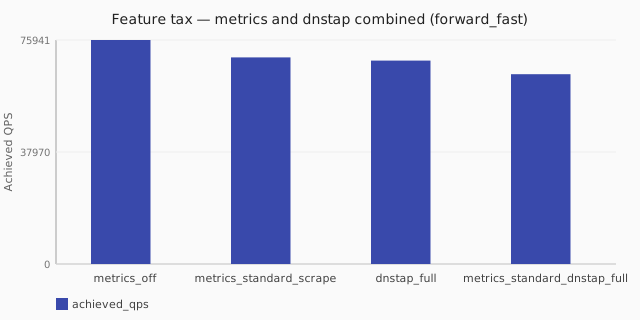
| Posture | Runtime | Achieved QPS | Avg latency (ms) | Sent | Completed | Lost | Workers |
|---|---|---|---|---|---|---|---|
| metrics_off | sync | 75940.7 | 26.3 | 761386 | 761386 | 0 | ingress=2 |
| metrics_standard_scrape | sync | 70029.9 | 28.5 | 703153 | 703153 | 0 | ingress=2 |
| dnstap_full | sync | 68939.9 | 28.9 | 692386 | 692386 | 0 | ingress=2 |
| metrics_standard_dnstap_full | sync | 64339.4 | 31.0 | 645499 | 645499 | 0 | ingress=2 |
At a glance
- metrics and dnstap combined (forward_fast):
metrics_standard_scrapecosts about 8% QPS versusmetrics_off(~70k vs ~76k);dnstap_fullcosts about 9% QPS versusmetrics_off(~69k vs ~76k);metrics_standard_dnstap_fullcosts about 15% QPS versusmetrics_off(~64k vs ~76k).
Takeaway
Scrape and dnstap each cost QPS; together they cost more. Versus observability off (~76k): standard scrape about 8% (~70k), fuller dnstap about 10% (~69k), both on about 16% (~64k). Combined is higher than either alone without claiming a precise interaction model.
What to do: enable each surface only if you need it. Size them separately with the metrics scrape tax and dnstap emit tax, then remeasure the pair on your hardware before production.
Related guides
Member scenarios
- feature-tax-metrics-off-forward-fast
- feature-tax-metrics-standard-scrape-forward-fast
- feature-tax-dnstap-full-forward-fast
- feature-tax-metrics-standard-dnstap-full-forward-fast